






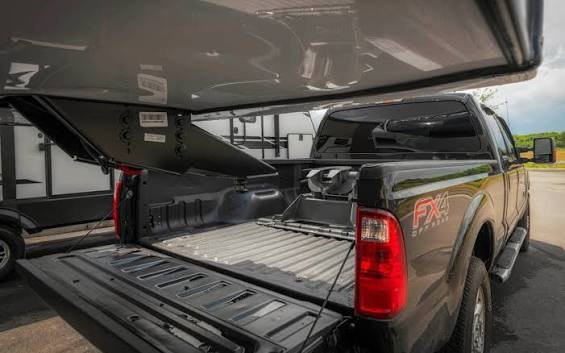

Choosing the right camper hitch comes down to matching three numbers, your camper’s weight, your vehicle’s towing capacity, and the hitch’s rating, before you decide on a type. Get this match wrong and you’re looking at trailer sway, hitch failure, or a camper that’s simply illegal to tow on the road.
Most people shopping for a hitch make the mistake of picking one based on price or what the dealership had in stock. That’s backwards. A hitch isn’t a random connector, it’s the single point holding thousands of pounds behind your vehicle at highway speed. Get the right camper hitch and the tow feels stable even in crosswinds. Get the wrong one and you’ll feel every bump, every gust, every lane change in your steering wheel.
This guide walks you through exactly how to pick the correct hitch, step by step, without the jargon overload most towing guides throw at you.
What Is a Camper Hitch and Why It Matters
A camper hitch is the mechanical connection between your tow vehicle and your camper, and its job is to carry the camper’s weight safely while keeping it stable at speed. It’s not just a hook and a ball. It’s a rated safety system with a maximum weight it can legally and physically handle.
Here’s what people get wrong: they assume any hitch that “fits” is good enough. It isn’t. A hitch that physically bolts onto your vehicle can still be rated for less weight than your camper puts on it. That mismatch is where most towing accidents start.
Expert Tip: Never trust the hitch class name alone. I’ve seen people buy a “Class 3” hitch and assume it’s automatically good for 8,000 lbs, then get surprised when the actual stamped rating on their specific hitch says 6,000 lbs. Always check the weight rating stamped directly on the hitch itself, not the marketing label on the box. Classes are a rough guide, the stamp is the legal and safety limit.
A few real examples of why this matters:
- A Class 1 hitch on a hatchback might handle a small utility trailer fine, but hook a 2,500 lb teardrop camper to it and you’re already over the limit before you’ve loaded a single bag.
- A full-size pickup with a Class 3 hitch can usually handle a mid-size travel trailer, but if that trailer’s tongue weight jumps past 800 lbs once you’ve packed water tanks and gear, the hitch (not just the truck) becomes the limiting factor.
- Fifth wheel campers need a completely different setup mounted in the truck bed, not a rear receiver hitch at all, because the weight sits over the axle instead of hanging off the back.
A properly matched camper hitch does three jobs at once:
- Supports the tongue weight without sagging the rear of your vehicle
- Keeps the trailer tracking straight behind you, especially in wind or when trucks pass
- Transfers braking and steering control back to your vehicle instead of letting the trailer push it around
Key Takeaways: Camper Hitch Quick-Scan
| Factor | What It Means | Why It Matters |
|---|---|---|
| Pro: Matched hitch class | Hitch rating equals or exceeds camper’s GTW | Prevents sway, sag, and hitch failure |
| Pro: Weight-distribution hitch | Spreads tongue weight across both axles | Better braking and steering control |
| Con: Underrated hitch | Hitch rated below camper’s actual loaded weight | Illegal to tow, voids insurance in a crash |
| Con: Wrong receiver size | 1¼” hitch forced onto a 2″ trailer setup (or reverse, via adapter) | Adapters weaken the connection under load |
| Pro: Frame-mounted hitch | Bolts to vehicle frame, not bumper | Handles heavier campers, better stability |
| Con: Bumper-only hitch | Relies on bumper strength alone | Fine for light loads, unsafe for full-size campers |
This is why “what’s the right hitch for my camper” isn’t really a shopping question. It’s a weight-matching question first, and a shopping question second. The next section breaks down exactly which numbers you need before you even look at hitch types.
FAQs About Choosing a Camper Hitch
1. What hitch class do I need for my camper?
Match the hitch class to your camper’s fully loaded GTW, not the dry weight listed by the manufacturer. A small teardrop under 2,000 lbs needs Class I, while a mid-size travel trailer usually needs Class III or IV. Always check the actual stamped rating, not just the class number.
2. Can I tow my camper with the hitch that came with my vehicle?
Only if the factory hitch’s rated capacity meets or exceeds your camper’s loaded GTW and tongue weight. Many factory hitches are rated lower than aftermarket options. Check the sticker on the hitch itself or your owner’s manual before assuming it’s sufficient for your camper.
3. Do I need a weight-distribution hitch for my travel trailer?
Yes, if your camper’s tongue weight is over 500 lbs, or if you notice rear sag or sway at highway speed. Weight-distribution hitches spread that load across both vehicle and trailer axles, which improves braking, steering, and overall stability significantly.
4. What’s the difference between a weight-carrying and weight-distribution hitch?
A weight-carrying hitch lets the tongue weight rest entirely on the rear axle, fine for lighter trailers. A weight-distribution hitch uses spring bars to spread that weight across all axles, which is necessary for heavier campers to prevent sag and sway.
Must Read: AFL Grand Final 2026: Huge Crowd Packs the MCG for Fremantle vs Brisbane Lions


[…] How to Choose the Right Camper Hitch for Your Adventures (2026 Guide)by Aarav KashyapSeptember 26, 2026 […]
[…] Must Read: How to Choose the Right Camper Hitch for Your Adventures (2026 Guide) […]